
Choosing the best fence contractor in Charlotte NC means evaluating four non-negotiable standards: installation experience, customer communication, workmanship, and material quality. Skip any one of these, and you risk a fence that fails early, violates local codes, or costs far more to fix than it did to install. Charlotte homeowners face a crowded market of fence installers, and the differences between a professional job and a poor one are not always obvious upfront. This guide gives you the exact criteria to screen contractors confidently, with Fence Guy Carolina as the professional benchmark throughout.
How do installation experience and years in business impact contractor reliability?
A contractor’s years in business is one of the clearest signals of reliability you can find. Companies that have survived a decade or more in the Charlotte market have done so by satisfying customers consistently. Fence Guy Carolina has completed thousands of installations since 2003, which reflects a track record that newer operations simply cannot match.
Experience also means familiarity with Charlotte’s specific site conditions. Soil types vary across Mecklenburg County, and an experienced installer knows how deep to set posts in clay-heavy ground versus sandy fill. That knowledge prevents leaning posts and premature fence failure.
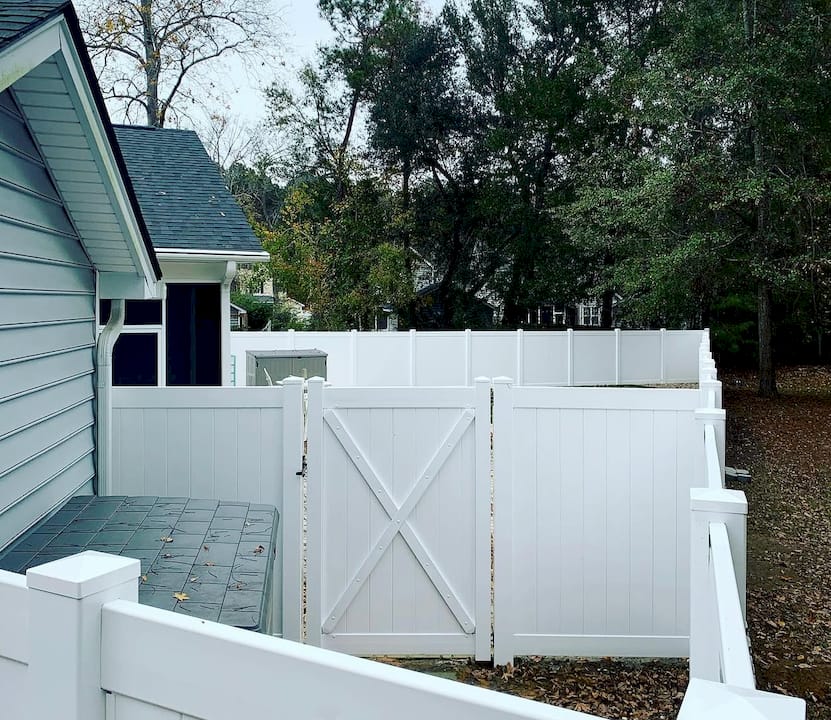
Local experience also means knowing the rules. Contractors who have worked in Charlotte, Huntersville, and Matthews for years understand setback rules and processes without needing to look them up. That saves you time and protects you from costly mistakes.
Here is what to look for when evaluating a contractor’s experience:
Years in business: Prioritize contractors with at least five years of active local operation.
Project volume: Ask how many residential fences they install per year. High volume means refined processes.
Local references: Request contacts from recent jobs in your specific neighborhood or municipality.
Specialty knowledge: Confirm they have installed the specific fence type you want, whether aluminum fencing, vinyl, or wood.
Site problem history: Ask how they have handled unexpected underground obstacles or uneven terrain.
Why is customer communication essential and how to evaluate it before hiring?
Clear communication is the single most reliable predictor of a smooth fence installation. A contractor who responds promptly to your first inquiry, explains the process clearly, and answers questions without pressure is showing you exactly how they will behave once your deposit is paid.
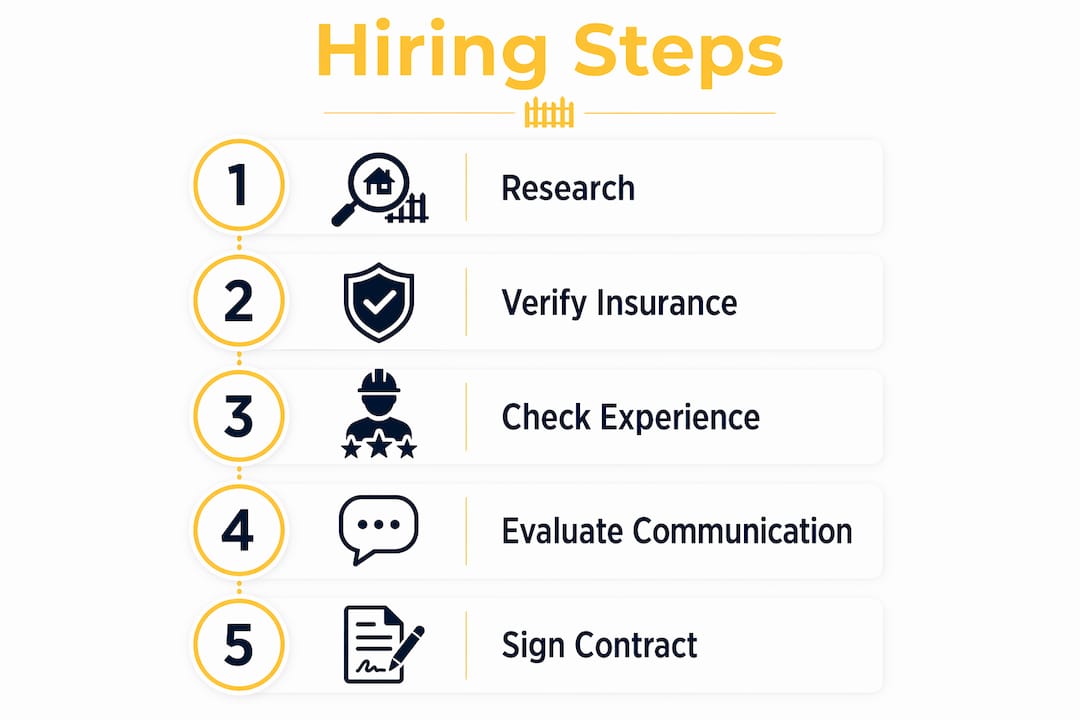
Effective communication includes clear timelines, progress updates, and transparent pricing, and it correlates strongly with higher customer satisfaction and repeat business. That is not a soft metric. It is the difference between a project that finishes on schedule and one that drags on for weeks with no updates.
Before you sign anything, ask these questions to gauge communication quality:
How will you notify me if the installation date changes? A professional contractor has a clear answer, whether by phone, text, or email.
Who is my point of contact during the project? You should have one named person, not a general office number.
What does your contract include? Look for itemized materials, labor costs, start date, and completion date.
What happens if there is a delay? A professional contractor has a defined process for communicating setbacks.
Fence Guy Carolina walks homeowners through every step before work begins, covering material lead times in the initial consultation. That upfront clarity prevents surprises later.
What defines high workmanship and material quality in fence installation?
Workmanship quality shows up in the details that most homeowners do not notice until something goes wrong. Proper post depth, consistent panel spacing, level top rails, and clean site cleanup after installation are all signs of a professional crew. A fence that looks slightly off on day one will look significantly worse after two years of weather exposure.
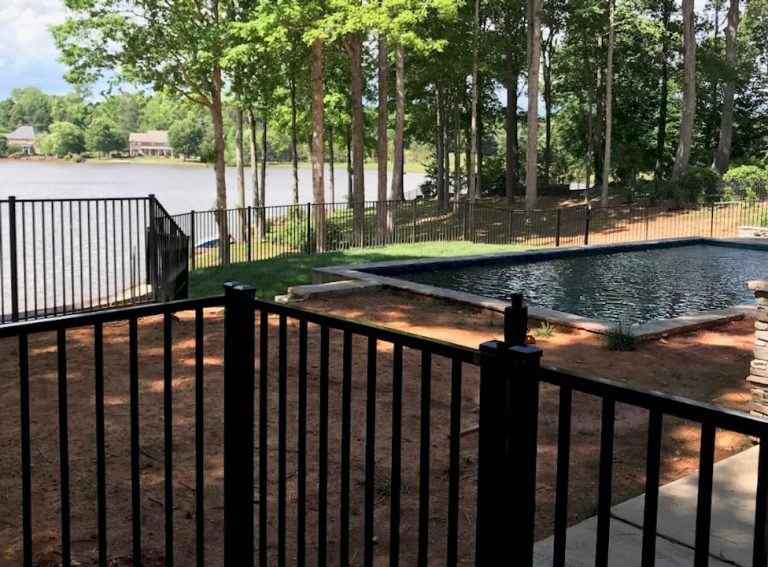
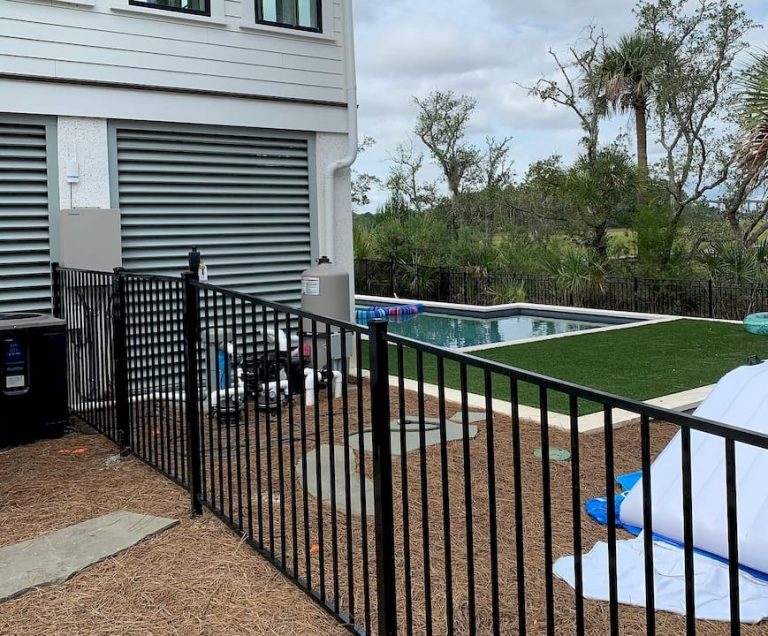
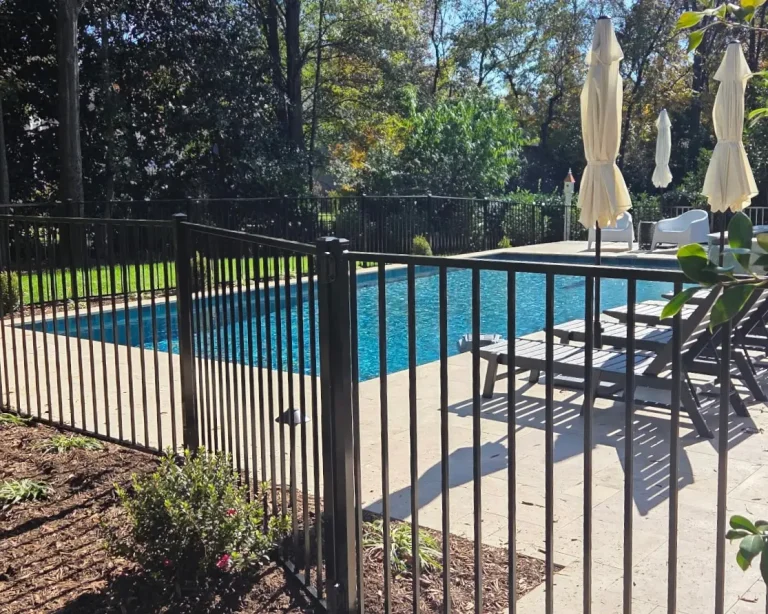
Material choice is equally important. Aluminum fencing with powder-coated finishes offers durability and low maintenance, resisting weathering better than wood or vinyl. That makes aluminum the preferred choice for homeowners who want long-term value without annual repainting or staining.
| Material | Maintenance level | Typical lifespan | Best use case |
|---|---|---|---|
| Powder-coated aluminum | Very low | 30+ years | Decorative, pool, security |
| Vinyl | Low | 20–30 years | Privacy, residential borders |
| Wood | High | 10–15 years | Traditional aesthetics |
The table above reflects general industry expectations. Aluminum’s lifespan advantage is significant. A wood fence requires repainting or staining every few years and is vulnerable to rot and insect damage. Vinyl holds up better but can crack under impact. Aluminum requires almost no upkeep beyond an occasional rinse.
Signs of professional workmanship to look for during and after installation include:
Posts set at consistent depth with concrete footings
Panels aligned without visible gaps or bowing
Gates that swing freely and latch securely
No leftover materials, dirt piles, or debris on your property after completion
Pro Tip: Ask to see a recently completed job in person, not just photos. Photos can hide uneven panels and sloppy post work. A confident contractor will have no problem showing you a finished project nearby.
What does a professional installation process involve from contract to completion?
A professional fence installation follows a defined sequence of steps. Knowing that sequence helps you spot contractors who skip critical stages.
The typical timeline for a residential fence project in Charlotte runs 2–4 weeks from contract signing to final installation, with on-site work generally completed within one day.
| Stage | What happens | Who is responsible |
|---|---|---|
| Consultation and design | Site visit, measurements, material selection | Contractor and homeowner |
| Contract and deposit | Signed agreement with itemized scope | Both parties |
| Utility marking (811 call) | Underground lines flagged before digging | Contractor |
| Installation day | Posts set, panels installed, gates hung | Contractor crew |
| Final walkthrough | Homeowner inspects and approves work | Both parties |
Calling 811 for utility marking before post hole digging is a legal requirement in North Carolina, not an optional step. Contractors who skip it risk hitting gas, water, or electrical lines. That creates liability for you as the property owner if the contractor is not properly insured.
What critical questions should homeowners ask before hiring, and what red flags to avoid?
Screening a fence contractor takes about 20 minutes of direct questions. The answers reveal whether you are dealing with a professional operation or a risk.
North Carolina does not require a state license for residential fence projects under $30,000, but local municipalities may have their own business license requirements. That means licensing alone is not a reliable filter. You need to ask the right questions.
Start with these:
Do you carry general liability insurance and workers’ compensation? The industry standard is at least $1 million in general liability coverage. Ask for a certificate of insurance, not just a verbal confirmation.
How many verified reviews do you have, and what is your average rating? Top-rated fence companies in Charlotte typically carry over 50 reviews with an average of 4.5 stars or higher. Check Google and Angi independently.
What is your payment schedule? Avoid contractors who demand full payment upfront before any work begins.
Red flags to walk away from immediately:
No written contract or vague scope of work
Unusually low bid with no explanation of what is excluded
No verifiable local reviews or references
Pressure to sign the same day without time to compare
Fence Guy Carolina’s approach is fully transparent. That is the model every homeowner should expect from a top-rated fence company in Charlotte.
Key Takeaways
Choosing the right fence contractor in Charlotte NC requires verifying insurance, experience, communication practices, and material quality before signing any contract.
| Point | Details |
|---|---|
| Verify insurance first | Require at least $1 million in general liability coverage and workers’ compensation before any work begins. |
| Prioritize local experience | Contractors with years of Charlotte-area installations understand local conditions. |
| Aluminum outperforms other materials | Powder-coated aluminum lasts 30+ years with minimal upkeep, making it the strongest long-term value for most homeowners. |
| Communication predicts outcomes | Contractors who explain timelines and pricing upfront consistently deliver better results and fewer surprises. |
Fence Guy Carolina: a professional standard for Charlotte homeowners
Fence Guy Carolina has served the Greater Charlotte area since 2003, completing thousands of residential installations with a process built around transparency, code compliance, and lasting material quality. Homeowners are never left guessing about what comes next.

The company’s residential fencing options include aluminum, vinyl, and wood, with aluminum as the primary focus for homeowners who want durability and low maintenance. Whether you need privacy fencing, a pool barrier, or a decorative perimeter, Fence Guy Carolina matches the right solution to your property’s specific needs. Request a free fence estimate and get a clear, itemized quote from a contractor with a proven Charlotte track record.