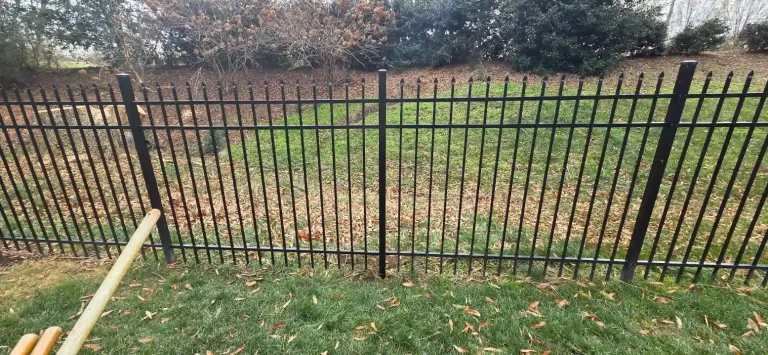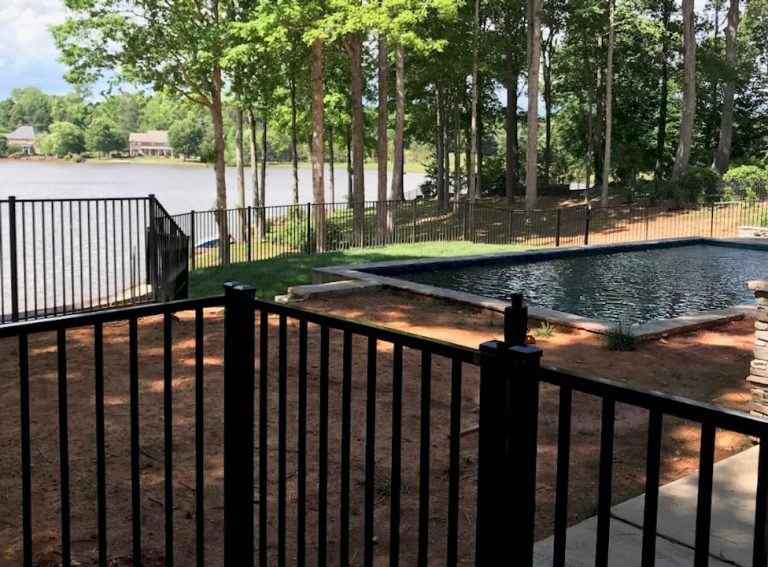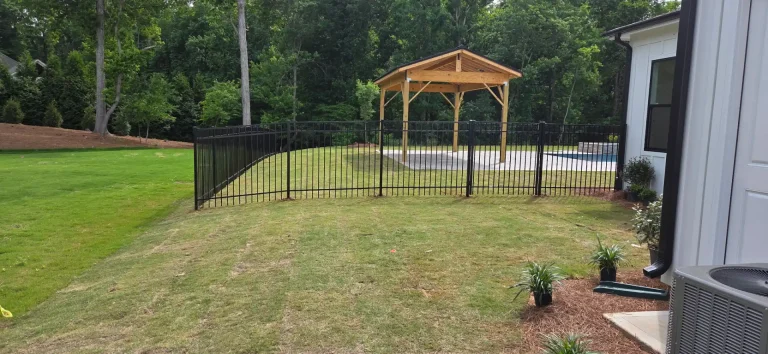

Black aluminum fencing delivers reliable security without blocking your view by combining an open picket structure, rust-proof aluminum construction, and a powder-coated finish that requires almost no upkeep. Known in the industry as ornamental aluminum fencing, this style has become the preferred choice for homeowners and property developers who refuse to trade sightlines for safety. The vertical picket design creates a clear physical barrier while keeping your yard, garden, or landscape fully visible from inside and outside the property. Fenceguycarolina has installed thousands of these fences across the Greater Charlotte area since 2003, and the demand for this style has only grown.
How black aluminum fencing delivers security without blocking your view
Ornamental aluminum fencing secures a property through physical deterrence, not visual obstruction. The vertical pickets are spaced closely enough to prevent a person from squeezing through, yet open enough to preserve full sightlines across your yard or landscape. This is the core advantage that separates aluminum picket fencing from solid wood privacy panels or concrete walls.
The security comes from the fence’s structure, not its opacity. Pressed spear tops on each picket deter climbing by eliminating footholds and handholds, while the rigid aluminum frame resists bending and impact. A six-foot ornamental aluminum fence with spear tops presents a serious physical challenge to anyone attempting to breach it, without turning your yard into a walled compound.
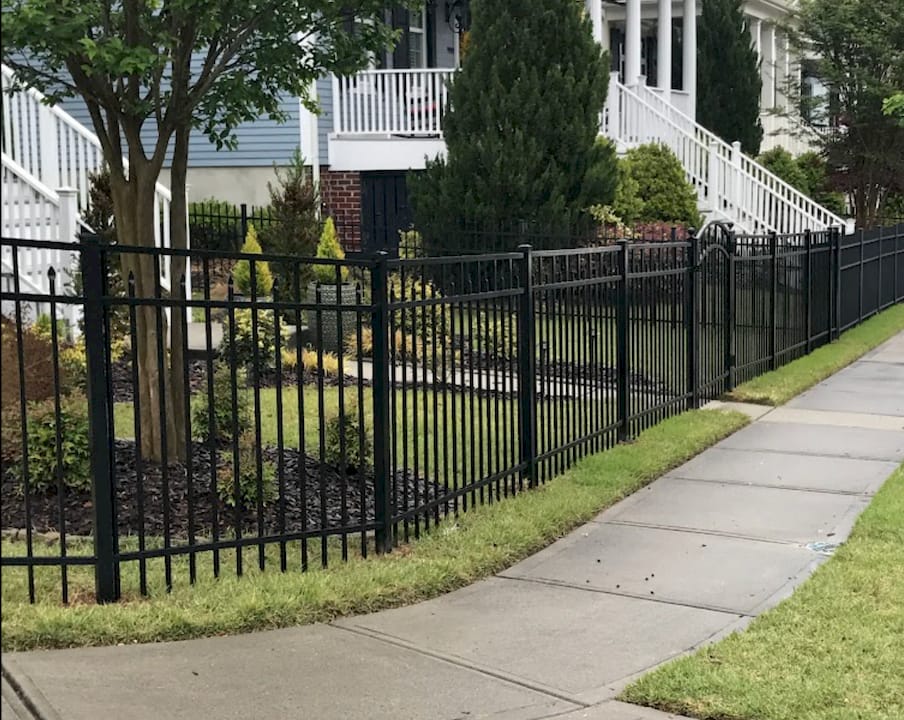
Black plays a specific optical role here. Black pickets absorb light and visually recede into the background, making the fence far less obtrusive than white, tan, or galvanized metal. The result is what designers call the “invisible perimeter.” Your eye travels past the fence to the landscape beyond, rather than stopping at the barrier itself.
What makes aluminum so durable and low maintenance
Aluminum’s material properties are the reason this fencing style works so well over decades. Unlike wrought iron, aluminum does not rust. Unlike wood, it does not rot, warp, or require annual sealing. Aluminum is rust-proof and corrosion-resistant, outperforming both wood and iron in long-term weather exposure. That durability translates directly into lower lifetime costs for homeowners.
The powder-coated finish applied to black aluminum fencing adds another layer of protection. The coating bonds to the aluminum surface under heat, creating a finish that resists fading, chipping, and scratching far better than standard paint. This is why the black color stays deep and consistent for years without repainting.
Here is what the maintenance picture actually looks like for a black aluminum fence:
Rust and rot: Not a concern. Aluminum does not oxidize the way iron does.
Painting: Never required. The powder coat is the finish.
Cleaning: An occasional rinse with soap and water removes dirt and pollen.
Structural repairs: Rarely needed unless a panel sustains direct impact.
Lifespan: 30 to 50 years with proper care, far exceeding wood’s typical 15 to 20 year lifespan.
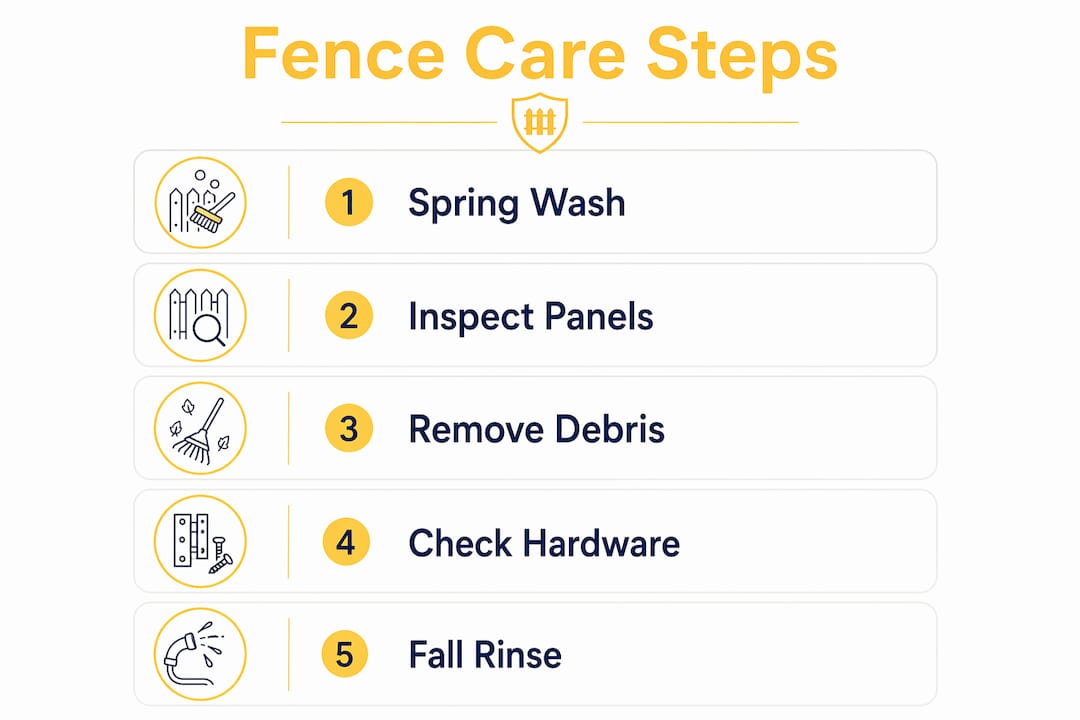
Pro Tip: Rinse your aluminum fence with a garden hose twice a year, once in spring and once in fall, to remove pollen and debris before it accumulates in the picket joints. That is the full extent of routine maintenance for most homeowners.
Design features that keep your property open and secure
The security and visibility of black aluminum fencing come directly from specific design decisions. Understanding these choices helps you select the right configuration for your property.
Vertical pickets with no horizontal mid-rails. Horizontal rails give climbers a foothold. Removing the middle rail from a fence panel forces anyone attempting to climb to grip only the narrow vertical pickets, which is far more difficult. Many ornamental aluminum styles offer a two-rail design (top and bottom only) for exactly this reason.
Pressed spear tops. A flat-topped picket is easier to grip than a spear top. Spear-topped pickets are a standard security upgrade that adds deterrence without looking aggressive or industrial.
Narrow picket spacing. Standard picket spacing runs between three and four inches. This width prevents most adults from passing through and meets pool barrier code requirements in most jurisdictions, including those in the Greater Charlotte area.
Height selection. A four-foot fence defines a boundary and deters casual entry. A five-foot or six-foot fence raises the physical challenge significantly. For pool enclosures or high-security perimeters, six feet is the standard recommendation.
Customizable panel configurations. You can mix panel heights across a single property, using taller sections along rear boundaries and shorter decorative panels along the street-facing front yard.
Pro Tip: If your property sits on a slope, ask your installer about rackable aluminum panels. Rackable panels adjust to follow the terrain angle without leaving gaps at the base, which is where most fence security failures actually occur.
How aluminum compares to wood, vinyl, and iron
Choosing a fence material means weighing security, maintenance, cost, and visual impact against each other. The table below shows how black aluminum stacks up against the three most common alternatives.
| Feature | Black aluminum | Wood | Vinyl | Wrought iron |
|---|---|---|---|---|
| Rust and rot resistance | Excellent | Poor | Good | Poor |
| Maintenance required | Minimal | High (annual sealing, painting) | Low | High (rust treatment, painting) |
| View preservation | Excellent (open picket) | Poor (solid panels) | Poor (privacy panels) | Good (open picket) |
| Lifespan | 30 to 50 years | 15 to 20 years | 20 to 30 years | 20 to 40 years |
| Weight | Light | Heavy | Light | Very heavy |
| Color versatility | High (black is universally compatible) | Moderate | Moderate | Moderate |
Wood fencing offers privacy but demands consistent maintenance. A cedar privacy fence needs staining or sealing every one to three years, and even well-maintained wood begins to show rot and warping within 15 years in humid conditions. The solid panel design also eliminates sightlines entirely, which creates blind spots on your own property.
Vinyl fencing solves the maintenance problem but typically comes in solid panel configurations designed for privacy, not visibility. Aluminum’s open design preserves the view that vinyl panels block. For homeowners who want to see their landscape, vinyl privacy panels are the wrong tool.
Wrought iron offers a similar open picket aesthetic but requires regular rust treatment and repainting. Iron is also significantly heavier, making installation more labor-intensive and expensive. Aluminum delivers the same ornamental appearance at a fraction of the weight and with none of the rust risk. You can explore how aluminum compares to other materials in more detail if you are still weighing your options.
Installation and security tips that maximize protection
Getting the most from a black aluminum fence means making smart decisions before and during installation. The fence design matters, but so does how it is set in the ground and what surrounds it.
Hire a professional installer. Aluminum fence panels must be set at consistent post depths, typically 24 to 36 inches below grade depending on panel height. Posts set too shallow shift over time, creating gaps at the base. Fenceguycarolina’s installation teams set posts to local code specifications and account for soil type across the Greater Charlotte area.
Specify no middle rail on security sections. This single design choice removes the most common climbing foothold. It costs nothing extra and significantly raises the difficulty of scaling the fence.
Use lockable gate hardware. A fence is only as secure as its gate. Specify a self-closing, self-latching gate with a key-lockable latch on any gate that accesses a pool, rear yard, or driveway. This is a code requirement for pool barriers in most municipalities.
Combine open aluminum with privacy sections strategically. Mixing open aluminum fencing with privacy panels or hedges along specific sections of a property is a proven strategy. Use open aluminum along the street-facing front for visibility and curb appeal, and add privacy panels or planted hedges along the rear or side boundaries where you want screening.
Pair the fence with smart security tools. Pairing fencing with smart lighting, motion-activated cameras, and lockable gates creates a layered security system. The fence defines the perimeter; the technology monitors it.
Pro Tip: Position motion-activated lights at gate entry points and rear corners of the fence line. These are the two locations where most unauthorized entry attempts occur, and lighting alone deters a significant percentage of opportunistic intrusions.
Key takeaways
Black aluminum ornamental fencing is the most effective way to secure a residential property while preserving full sightlines, combining a rust-proof structure, open picket design, and a powder-coated finish that lasts 30 to 50 years with minimal upkeep.
| Point | Details |
|---|---|
| Open picket design preserves views | Vertical pickets with narrow spacing secure the perimeter without blocking sightlines. |
| Powder coat eliminates maintenance | The bonded finish resists fading and chipping, removing the need for painting or sealing. |
| Spear tops deter climbing | Pressed spear-top pickets remove footholds and make scaling the fence significantly harder. |
| Black color creates invisible perimeter | Black absorbs light and recedes visually, making the fence less obtrusive than lighter colors. |
| Layered security multiplies protection | Combining aluminum fencing with smart lighting and lockable gates creates a complete security system. |
Why the invisible perimeter is the most underrated concept in residential fencing
Most homeowners think about fencing in terms of what it blocks. Black aluminum fencing works on the opposite principle. The black color frames scenic views the way a picture frame draws your eye to the painting, not to the frame itself. That is a fundamentally different way to think about a security barrier.
I have seen properties where a white aluminum fence of identical design made the yard feel smaller and more enclosed, while the same fence in black made the yard feel open and connected to the street. The color alone changed the spatial experience. Black is the most versatile fence color for this reason. It works against brick, stucco, siding, and stone without competing with any of them.
The mistake I see most often is homeowners choosing a solid privacy fence for security reasons when what they actually need is deterrence, not concealment. A solid fence hides what is happening on both sides of it. An open aluminum fence lets you see out while making it physically difficult for anyone to get in. For most residential properties, that is the better security outcome.
If you are developing a property or planning a major renovation, I would argue that fencing by purpose is the right framework. Define what each section of your perimeter needs to accomplish, then select the fence style that achieves that specific goal. Black aluminum handles the security and visibility requirements for most of those sections better than any other material at a comparable price point.
Secure your property with Fenceguycarolina’s aluminum fencing
Fenceguycarolina has specialized in aluminum fence installation across the Greater Charlotte area since 2003, with thousands of residential installations completed to local code standards.

Every project includes a consultation to match panel height, picket spacing, and gate hardware to your specific security and aesthetic goals. Whether you are enclosing a pool, defining a front yard boundary, or securing a rear perimeter, Fenceguycarolina’s team handles the design, permitting knowledge, and installation from start to finish. Explore the full range of residential fencing options or browse aluminum fence installation services to find the right configuration for your property.