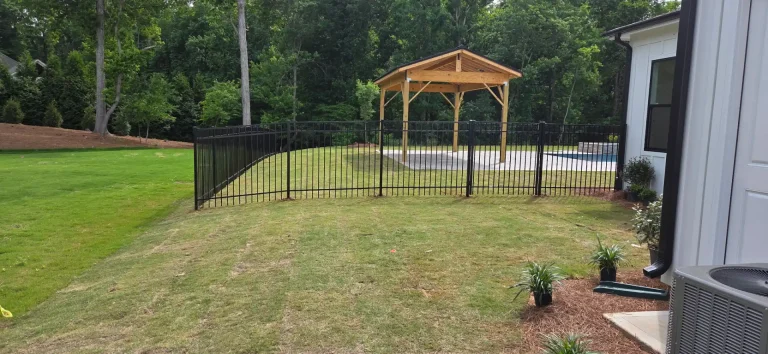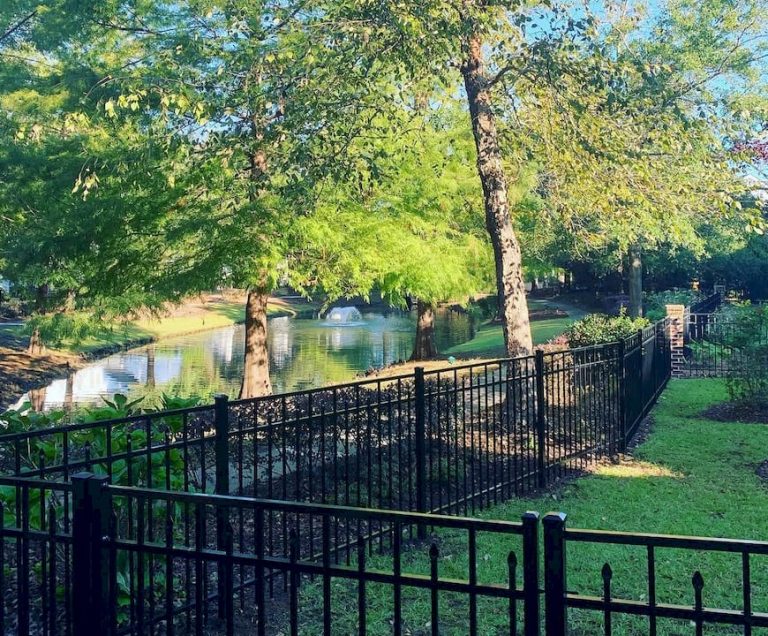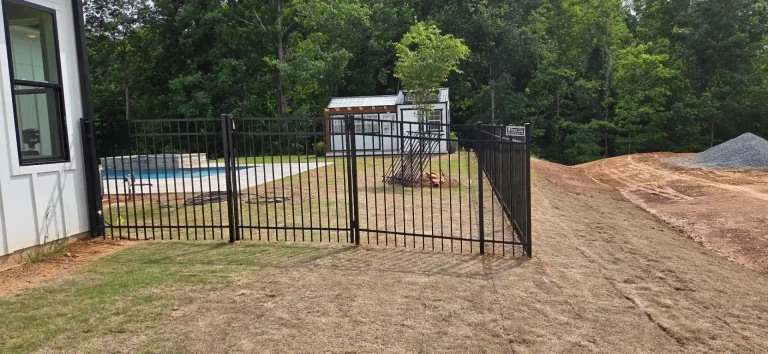

Premium aluminum fencing for lakefront homes in Cornelius and Lake Norman is defined as ornamental, powder-coated aluminum fencing engineered for corrosion resistance, wind load tolerance, and compliance with local shoreline regulations. Lakefront properties along Lake Norman face a specific set of challenges: moisture exposure, Duke Energy shoreline rules, Cornelius zoning codes, and HOA restrictions that eliminate many fencing materials from consideration. Aluminum fencing clears every one of those hurdles. It resists rust without ongoing maintenance, satisfies material restrictions in Cornelius, and delivers the clean, upscale look that lakefront neighborhoods demand. If you own property on Lake Norman and want a fence that lasts, looks sharp, and stays legal, ornamental aluminum is the clear answer.
What are the fence regulations in cornelius and lake norman?
Lakefront homeowners in Cornelius must navigate two separate layers of regulation before a single post goes in the ground. The first layer is the town’s zoning code. Front yard fences max out at 4 feet, while side and rear yard fences are permitted up to 6 feet, with a variance required for anything taller. Lake Norman lots carry additional buffer restrictions that can reduce those limits further depending on your shoreline classification.
The second layer is Duke Energy’s Shoreline Management Plan. Fences near the shoreline require Duke Energy approval through the Lake Access Permit System before installation. Skipping this step is one of the most expensive mistakes lakefront homeowners make. Verifying your shoreline classification early prevents costly revisions after the fence is already built.
Cornelius also enforces a 25-foot sight triangle at intersections where no fence or vegetation over 3 feet tall is allowed. Corner lots require careful planning because a fence that meets the general height limit can still violate sight triangle rules. This catches many homeowners off guard.
Front yard maximum: 4 feet
Side and rear yard maximum: 6 feet
Sight triangle zones: 3-foot maximum within 25 feet of intersections
Shoreline buffer zones: Duke Energy permit required
Permitted materials: treated wood, vinyl, ornamental aluminum, wrought iron, galvanized steel picket, and masonry
Pro Tip: Pull your property’s shoreline classification from Duke Energy’s Lake Access Permit System before you finalize any fence design. The classification determines exactly how close to the water your fence can go, and it affects your post placement options significantly.
Why is aluminum the best fencing for lake homes?
Aluminum outperforms every other common fencing material in a lakefront environment. The reason comes down to chemistry and physics, not just marketing. Powder-coated aluminum forms a moisture and oxygen barrier that is thicker and more uniform than liquid paint. That coating bonds directly to the metal through an oven-curing process, making it far more durable than a brushed or sprayed finish. Wood and vinyl cannot match that level of corrosion protection.
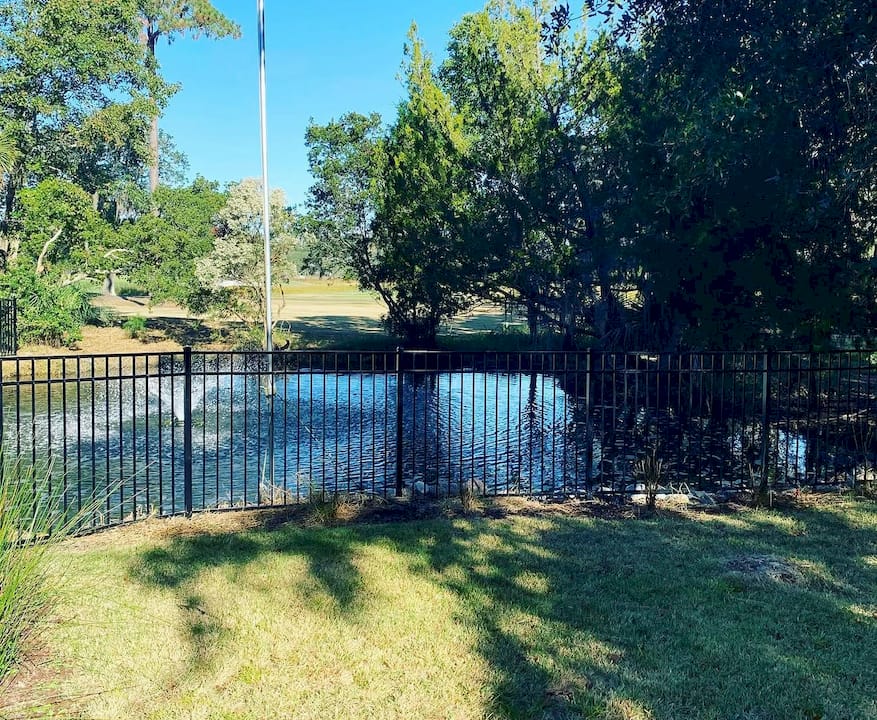
Wind load is the second major factor. Open aluminum designs with picket spacing or welded wire infill allow airflow through the fence, which reduces the force the structure must absorb during lake wind events. A solid privacy fence acts like a sail. An open aluminum design lets the wind pass through, protecting the posts, rails, and hardware from stress that causes sagging and failure over time.
| Feature | Aluminum | Wood | Vinyl |
|---|---|---|---|
| Corrosion resistance | Excellent (powder-coated) | Poor without treatment | Good |
| Wind load performance | Excellent (open design) | Fair | Fair |
| Maintenance required | Minimal | High (staining, sealing) | Low |
| HOA and lakefront approval | Widely accepted | Widely accepted | Accepted |
| Structural strength | High | Moderate | Lower than aluminum |
| Lifespan near water | 20+ years | 10–15 years | 15–20 years |
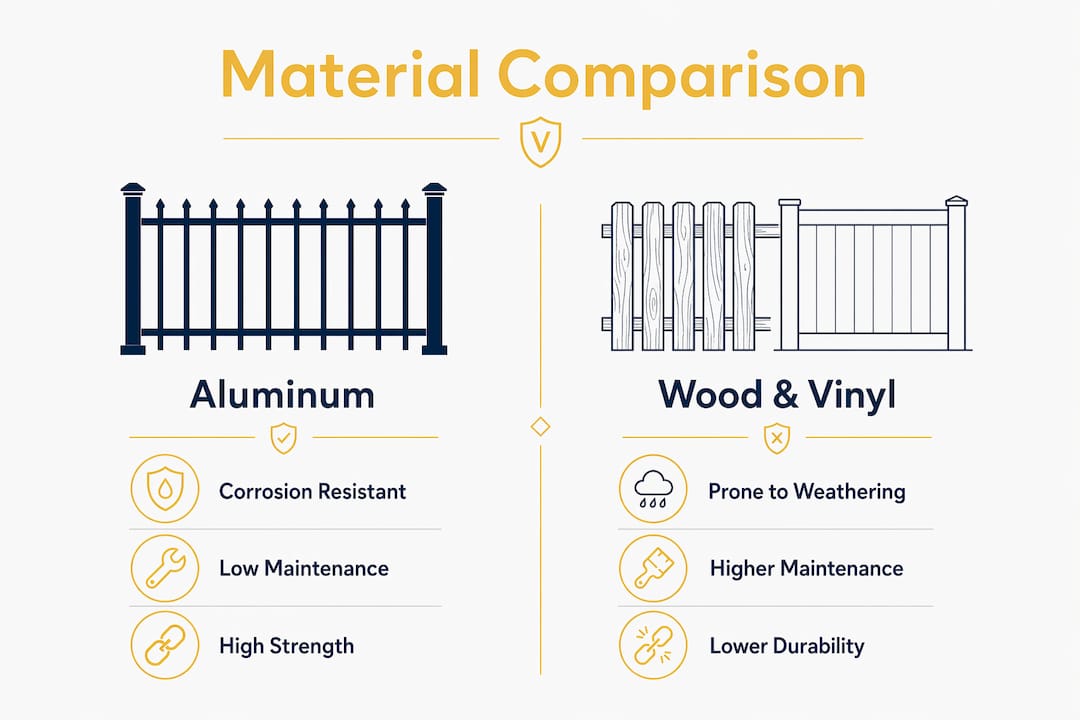
Aluminum also gives you design flexibility that wood cannot match without significant cost. You can choose from flat-top, spear-top, or dog-ear profiles in multiple heights and colors. Black and bronze powder-coated finishes are the most popular choices on Lake Norman because they complement both modern and traditional lakefront architecture.
Pro Tip: Request a sample panel from your installer and leave it outside near the water for a few weeks before committing to a finish. You want to see how the color reads in natural lakefront light before it goes on 200 linear feet of fence.
How do you plan the right aluminum fence for your lakefront property?
Good lakefront fence design starts with a zone strategy. Combining welded wire infill for airflow with privacy screening where you need visual blocking gives you the best of both worlds. Use open picket sections along the water-facing side to preserve your view and reduce wind load. Add privacy panels or tighter infill on the sides facing neighbors or the road. This approach satisfies both the aesthetic and structural demands of a waterfront lot.
Follow these steps when planning your installation:
Pull your zoning map. Confirm your lot’s front, side, and rear yard setbacks from the Cornelius Planning Department before measuring anything.
Check your shoreline classification. Contact Duke Energy’s Lake Access Permit System to identify your buffer zone boundaries and required permits.
Mark your sight triangles. If your lot has a corner, measure 25 feet from each right-of-way line and flag those zones. No fence over 3 feet goes inside that boundary.
Design your zones. Decide where you need privacy screening versus open picket sections. Map this on a simple sketch before ordering materials.
Engineer your gates. Gate posts and hardware need reinforced engineering to handle wind-induced racking loads near water. Undersized gate posts are the number one cause of early gate failure on lakefront properties.
Protect your powder coat. Coating scrapes during installation expose bare metal and create corrosion starting points. Specify that your installer uses protective wrapping on panels during transport and staging.
Coordinate your fence line with your landscaping plan before installation. Sprinkler heads, drainage swales, and planted beds placed after the fence goes in are the most common cause of coating damage and post corrosion. Sequence the work correctly from the start.
How does aluminum compare to other fencing options for lake norman homes?
Wood, vinyl, and aluminum each have a place in residential fencing, but they are not equally suited for lakefront conditions. Understanding where each material falls short helps you make a confident decision.
Wood offers a natural, warm aesthetic that many Lake Norman homeowners prefer. The tradeoff is maintenance. A wood fence on a lakefront lot requires staining or sealing every 2–3 years to resist moisture damage, and even well-maintained wood is vulnerable to rot at the post base where ground moisture concentrates. The ornamental aluminum versus wood comparison consistently shows aluminum winning on total cost of ownership over a 15-year period because maintenance costs for wood accumulate quickly.
Vinyl fencing offers low maintenance and good moisture resistance, but its structural strength is lower than aluminum. In high-wind conditions near open water, vinyl panels can flex, crack, or pull from their posts. You can explore vinyl fencing options as a secondary choice for sheltered areas of your property, but it is not the strongest choice for the water-facing perimeter.
Chain-link fencing is generally not favored for lakefront homes due to HOA restrictions and aesthetic concerns in regulated lakefront zones. Most Lake Norman HOAs explicitly prohibit chain-link on waterfront lots. This makes ornamental aluminum the practical default for homeowners who want a material that is durable, attractive, and universally accepted by local authorities and HOAs.
Aluminum: Best overall for lakefront. Corrosion-resistant, strong, low maintenance, HOA-approved.
Wood: Good aesthetics, high maintenance, moisture-vulnerable at posts.
Vinyl: Low maintenance, weaker structure, less suitable for wind-exposed perimeters.
Chain-link: Restricted or prohibited in most Lake Norman lakefront zones.
Key takeaways
Premium aluminum fencing is the most durable, regulation-compliant, and low-maintenance choice for lakefront properties in Cornelius and Lake Norman.
| Point | Details |
|---|---|
| Aluminum leads on durability | Powder-coated aluminum resists corrosion and wind stress better than wood or vinyl near water. |
| Two permit layers apply | Cornelius zoning rules and Duke Energy’s Shoreline Management Plan both govern lakefront fence placement. |
| Zone strategy wins | Combine open picket sections near water with privacy panels on sides to balance wind load and screening. |
| Gate engineering matters | Reinforce gate posts and hardware specifically for wind-induced racking loads common on lakefront lots. |
| Protect the powder coat | Prevent coating scrapes during installation to avoid corrosion starting points that shorten fence life. |
What i’ve learned installing fences on lake norman properties
The homeowners who get the best results on Lake Norman are the ones who treat the permit process as part of the design process, not an afterthought. I have seen projects delayed by months because a homeowner finalized their fence layout before checking their shoreline classification with Duke Energy. That classification determines your buffer zone, and the buffer zone determines where your posts can go. Start there.
The second thing I would tell every lakefront homeowner: do not underestimate your gates. Most fence failures I see on waterfront properties are not in the panels. They are in the gates. Wind hits a gate differently than a fixed panel because a gate swings and flexes. Undersized posts and cheap latch hardware fail within two to three seasons on an exposed lakefront lot. Spend the extra money on reinforced posts and commercial-grade hardware. You will not regret it.
The zone strategy is not just a design preference. It is a structural decision. Open picket sections near the water reduce the load your entire fence system must absorb. When homeowners insist on solid privacy panels all the way to the waterline, they are creating a wind sail that stresses every post and rail in the system. A mixed design looks better and lasts longer.
Finally, hire an installer who knows Cornelius and Lake Norman specifically. Local knowledge of Duke Energy’s permit process, Cornelius zoning maps, and HOA overlay rules is worth more than a lower bid from a contractor who has never worked a lakefront lot.
Fence Guy Carolina: aluminum fence installations for lake norman homes
Fence Guy Carolina has been installing fences across the Greater Charlotte area since 2003, with thousands of completed projects and deep familiarity with Cornelius zoning codes, Lake Norman HOA requirements, and Duke Energy’s shoreline permit process.

For lakefront homeowners, Fence Guy Carolina offers aluminum fence installation tailored to waterfront conditions, including reinforced gate engineering, zone-strategy design, and powder-coated finishes built for moisture exposure. The team handles permit coordination and custom design from the first measurement to the final post. You can also explore the full range of fencing solutions by purpose to find the right configuration for your specific lot. Contact Fence Guy Carolina for a free fence estimate and get your lakefront project started with a team that knows the local rules cold.