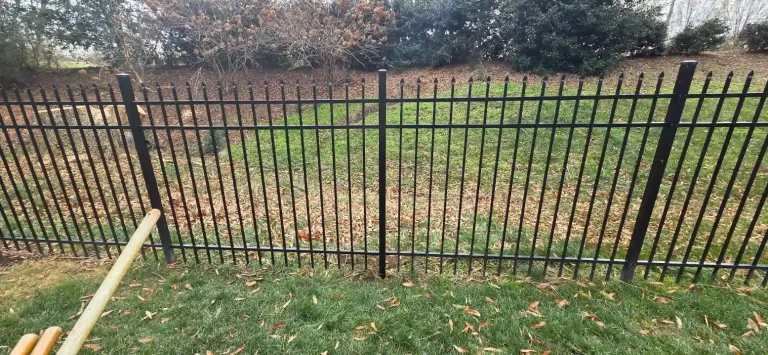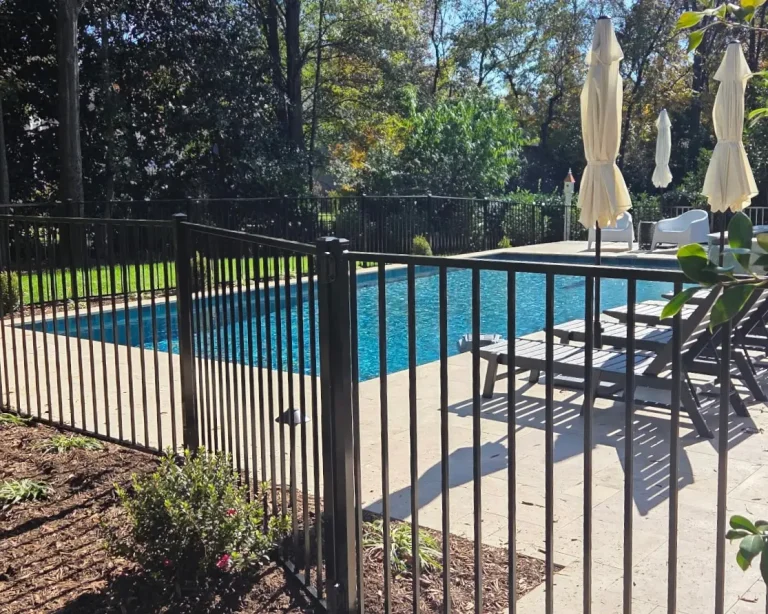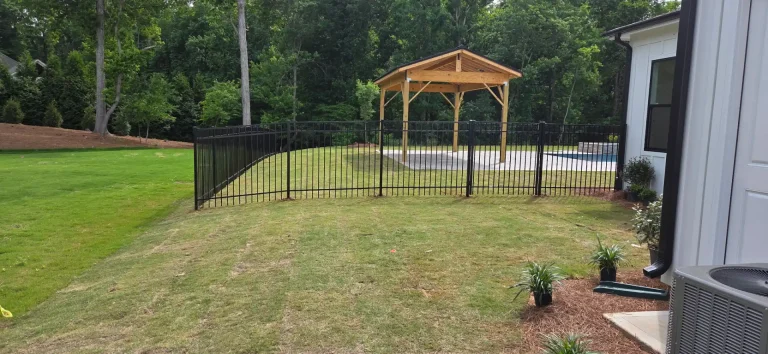

Aluminum fencing is the superior choice for most homeowners when durability, low maintenance, and long-term value are the deciding factors. That said, the aluminum vs. wood fencing debate is not one-size-fits-all. Wood fencing offers a lower upfront cost and a natural aesthetic that aluminum cannot fully replicate. Understanding the real trade-offs between these two materials, including total lifecycle cost, fire safety, and maintenance commitment, gives you the clearest path to the right decision for your property.
How do aluminum and wood fences compare in cost and lifespan?
The numbers tell a clear story. Aluminum fencing costs approximately $25 to $55 per linear foot installed, while wood fencing runs $15 to $35 per linear foot. That gap looks significant on day one, but it narrows fast once you account for what happens over the next two decades.
Aluminum fences carry an expected service life of 30 or more years. Wood fences typically last 10 to 20 years, and that upper range assumes consistent maintenance and favorable conditions. The structural weak point in wood is almost always the post. Soil moisture attacks buried posts from the base up, and once a post fails, the entire fence section becomes unstable.
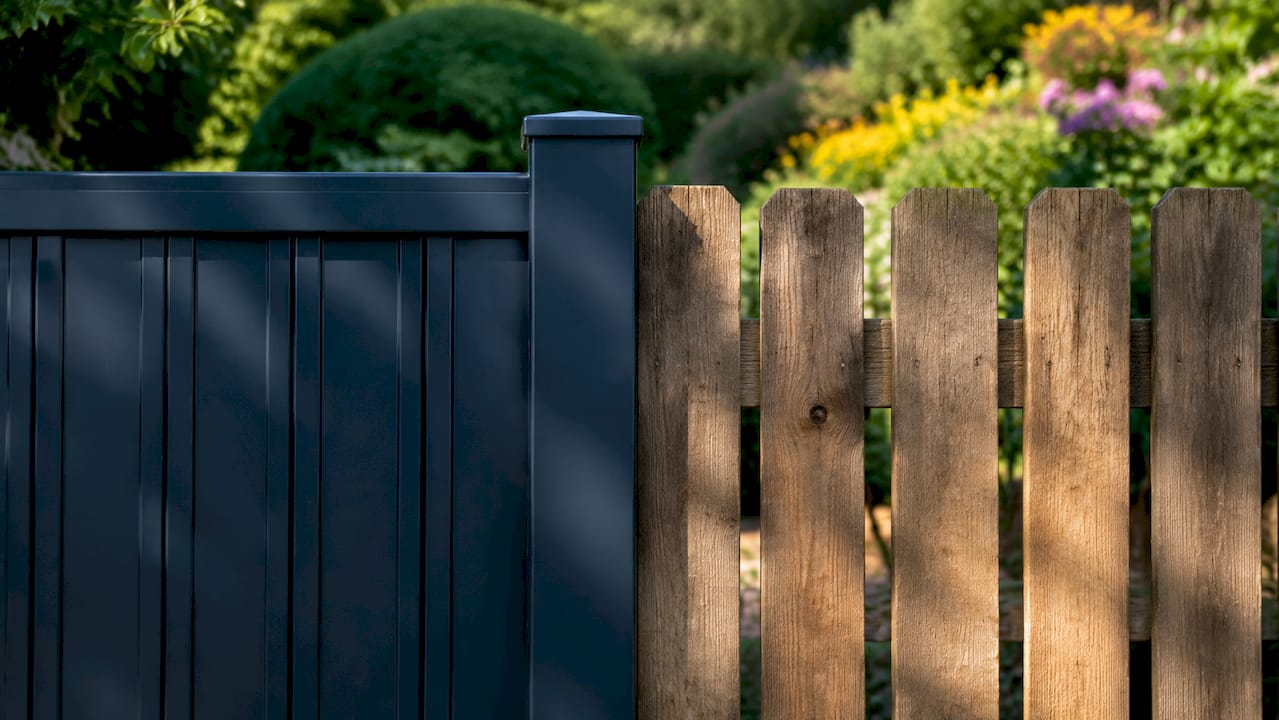
The total lifecycle cost for wood often exceeds aluminum when you factor in repainting, repairs, and likely partial or full replacement within 20 years. A homeowner who installs a wood fence at $20 per linear foot and replaces it once within 20 years has already spent more than the aluminum option, before counting labor and stain costs.
| Category | Aluminum | Wood |
|---|---|---|
| Upfront cost per linear foot | $25 to $55 | $15 to $35 |
| Expected lifespan | 20 to 30+ years | 10 to 20 years |
| Annual maintenance cost | Low (occasional rinse) | Moderate to high (staining, repairs) |
| Likely replacement within 20 years | Rare | Common |
Pro Tip: Get quotes for both materials and ask your contractor to include a 20-year maintenance estimate. The upfront price difference almost always shrinks when you run the full numbers.
For homeowners in the Charlotte area, aluminum fencing costs and styles vary by grade and design, so comparing quotes on equivalent fence heights and panel styles gives you the most accurate picture.
What are the maintenance requirements for aluminum vs. wood fencing?
Aluminum fencing needs roughly 1 to 2 hours of maintenance per year. That typically means rinsing off dirt and debris with a garden hose and inspecting the powder-coat finish for chips or scratches. The powder-coat finish is the primary wear item on an aluminum fence. The structural aluminum underneath will outlast the coating, so touching up the finish when needed is the only real recurring task.
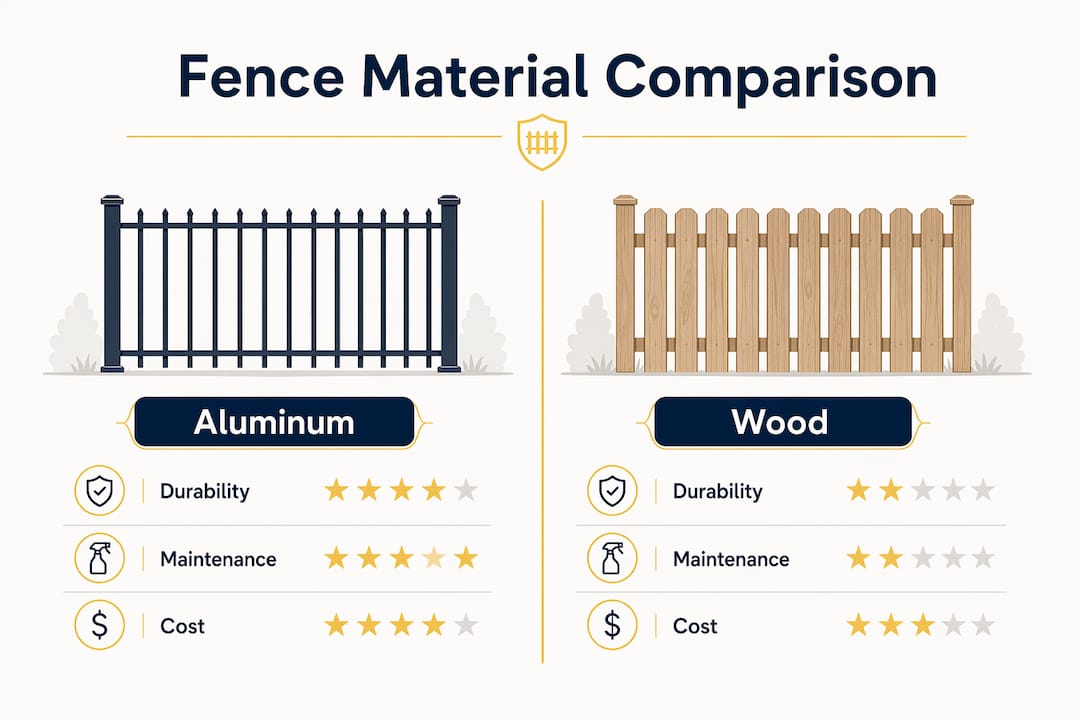
Wood fencing demands a fundamentally different commitment. Staining or sealing every 2 to 3 years is the baseline requirement, and pressure-treated pine often needs attention even more frequently depending on sun exposure and moisture. Skip one refinishing cycle and you accelerate rot, warping, and insect damage significantly.
Here is what routine wood fence maintenance actually involves:
- Cleaning the surface with a pressure washer or scrub brush before each refinishing
- Applying a wood preservative, stain, or sealant to all exposed surfaces including the bottom rail
- Inspecting posts at ground level for soft spots, which signal early rot
- Replacing individual boards as they crack, warp, or split
- Treating for termites or carpenter ants if you live in a region with high insect pressure
Wood fence post failure due to moisture exposure is the leading cause of early fence replacement. One practical fix is installing gravel trenches around the base of each post to improve drainage and reduce direct soil contact. It adds time during installation but extends post life by years.
Pro Tip: When installing a wood fence, ask your contractor about using concrete footings that extend above grade by two inches. This keeps the post base out of standing water and dramatically slows rot at the most vulnerable point.
How does fire safety differ between aluminum and wood fences?
Fire resistance is a factor most homeowners overlook until it becomes a code requirement. Aluminum is inherently non-combustible and achieves a Class A fire rating under both ASTM E84 and ASTM E136 testing standards. Wood is combustible and does not meet Class A fire rating without significant chemical treatment, which compromises its natural appearance and often its structural properties.
In fire hazard Zone 0, local fire codes require that all fence components, including posts, rails, and infill panels, be non-combustible. Aluminum and steel-framed aluminum systems meet this requirement directly. Wood does not. The Authority Having Jurisdiction (AHJ) in your area makes the final call on material acceptability, so checking with your local building department before purchasing is a necessary step if you live near a fire-prone area.
The practical implications for homeowners break down clearly:
- Aluminum fencing near a home or attached structure poses no fire spread risk
- Wood fencing can act as a fuel path that carries fire toward your home or garage
- Pool enclosures and property-line fences near structures benefit most from aluminum’s non-combustibility
- Fire code compliance can affect your homeowner’s insurance premiums in designated fire hazard zones
For homeowners exploring fencing by purpose, fire safety is one of the most practical reasons to choose aluminum for fences that run close to the home’s exterior walls or attached structures.
What aesthetic and functional considerations should homeowners weigh?
Wood fencing wins on natural warmth. The grain, texture, and organic color variation of cedar, redwood, or pressure-treated pine creates a look that aluminum cannot replicate. Wood can be painted or stained any color and reshaped on-site to fit unusual lot configurations. For homeowners who prioritize a traditional or rustic aesthetic, that flexibility is genuinely valuable.
Aluminum delivers a different kind of visual appeal. Modern aluminum fencing mimics the look of wrought iron with far less weight and zero rust risk. Powder-coat finishes come in black, bronze, white, and custom colors, and the clean lines of aluminum picket or flat-top styles suit contemporary and transitional home designs well.
The functional trade-offs are equally important:
- Privacy: Wood provides full privacy with solid board or board-on-board construction. Standard aluminum picket styles are open by design. Privacy panels can be added to aluminum systems, but they increase cost.
- Pool enclosures: Aluminum is the preferred material for pool barriers because it meets most local code requirements for gap spacing and height without the rot risk that undermines wood over time.
- Pet containment: Both materials work, but aluminum’s consistent picket spacing and structural rigidity make it more reliable for dogs that push or dig along fence lines.
- Noise reduction: Solid wood panels offer meaningful sound buffering. Aluminum picket fences provide none.
For homeowners who want to explore wood fencing options alongside aluminum, comparing panel styles side by side helps clarify which aesthetic fits your property before committing to installation.
How do installation and regional factors impact your fencing choice?
Aluminum fencing installation requires specialized tools and skills compared to wood, but the finished product delivers measurable advantages in durability and corrosion resistance. Aluminum panels are lightweight, which simplifies handling on sloped lots. Rackable aluminum panels follow the grade of a hill without leaving gaps at the bottom, a common problem with rigid wood panel sections.
Wood fencing is more accessible for experienced DIYers. Boards, rails, and posts are available at any lumber yard, and basic carpentry skills are enough to complete a straightforward installation. The trade-off is that wood requires treatment before and after installation to resist moisture and insects, and errors in post depth or concrete footing placement accelerate failure.
Regional factors that influence the aluminum vs. wood decision include:
- Coastal proximity: Aluminum’s corrosion resistance from its oxide layer and powder-coat finish makes it the clear choice within a few miles of saltwater. Wood deteriorates faster in high-humidity, salt-air environments.
- Fire hazard zones: As noted above, Zone 0 fire codes in many jurisdictions require non-combustible materials, which eliminates wood as an option near structures.
- Local zoning: Fence height limits, setback requirements, and HOA rules vary by neighborhood. Fenceguycarolina’s knowledge of Greater Charlotte zoning codes helps homeowners avoid costly permit issues before installation begins.
For a detailed look at how aluminum fencing is installed in real residential settings, the aluminum fence installation overview from Fenceguycarolina covers the process from post setting to panel alignment.
Key takeaways
Aluminum fencing delivers better long-term value than wood for most homeowners because its lower maintenance burden, longer lifespan, and fire resistance outweigh the higher upfront cost.
| Point | Details |
|---|---|
| Upfront cost favors wood | Wood costs $15 to $35 per linear foot vs. $25 to $55 for aluminum, but the gap closes over time. |
| Lifespan favors aluminum | Aluminum lasts 30 or more years; wood typically 10 to 20 years with consistent maintenance. |
| Maintenance burden is lower for aluminum | Aluminum needs 1 to 2 hours of care per year; wood requires staining or sealing every 2 to 3 years. |
| Fire safety favors aluminum | Aluminum achieves a Class A fire rating under ASTM E84 and ASTM E136; wood does not without treatment. |
| Aesthetics favor wood for privacy | Wood provides full privacy and natural warmth; aluminum suits open, decorative, and pool enclosure applications. |
What I’ve learned after years of watching homeowners choose fencing
Most homeowners underestimate how much the maintenance commitment matters until they are three years into owning a wood fence. The first refinishing cycle feels manageable. By the second or third, many people skip it, and that is when the fence starts to fail visibly. I have seen beautiful cedar fences look tired and gray within five years because the upkeep schedule slipped.
That said, I do not think aluminum is automatically the right answer for every yard. If your budget is tight and you want a solid privacy fence along a back property line with no fire code concerns, a well-installed wood fence with proper post drainage and a consistent maintenance schedule is a legitimate choice. The key word is consistent.
Where I think homeowners make the biggest mistake is treating upfront price as the only variable. The total cost of ownership over 20 years almost always favors aluminum, and that calculation does not even include the time and inconvenience of managing a fence that is rotting or warping. If you are building a pool enclosure, fencing near your home’s structure, or living in a coastal area, aluminum is not just the better choice. It is the obvious one.
Evaluate your property honestly. If you want low effort and long-term performance, aluminum wins. If natural aesthetics and a lower day-one cost matter more and you are committed to the upkeep, wood is a defensible option.
— SEO
Get expert fencing guidance from Fenceguycarolina
Choosing between aluminum and wood fencing is easier when you have a local expert who knows your neighborhood’s codes, soil conditions, and HOA requirements. Fenceguycarolina has completed thousands of residential fence installations across the Greater Charlotte area since 2003, working with aluminum, wood, vinyl, and more.

Whether you need a pool enclosure, a backyard privacy fence, or a decorative property-line solution, Fenceguycarolina matches the right material to your specific goals. Explore fencing by purpose to see how aluminum and wood options are matched to real homeowner needs, or browse residential fencing solutions to request a free estimate from a team that has been doing this work in the Carolinas for over two decades.