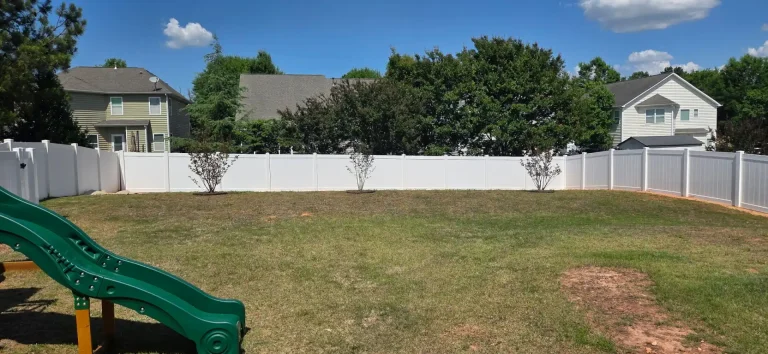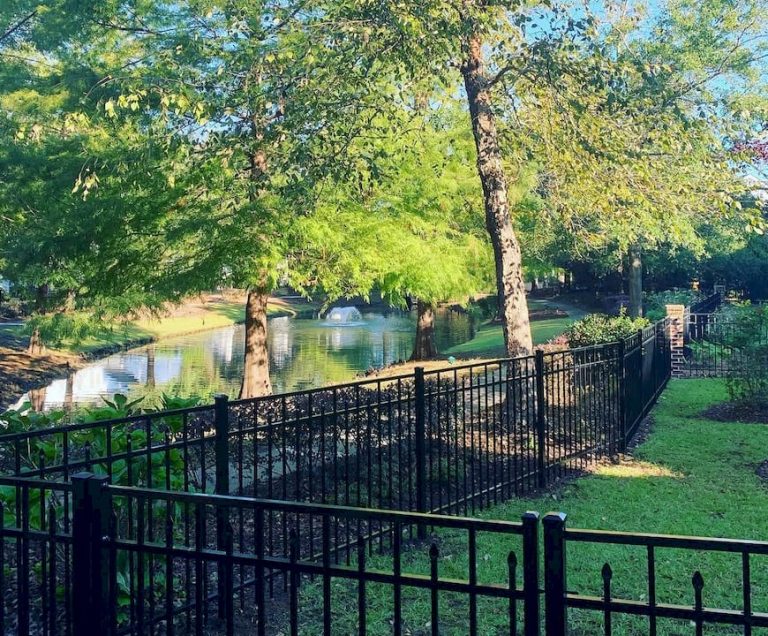

Black aluminum fencing is the preferred residential fencing solution for Charlotte homeowners because it delivers wrought-iron aesthetics, 30 to 50 years of service life, and near-zero maintenance in a single product. Known formally as ornamental aluminum fencing, it has become the dominant choice across neighborhoods from Ballantyne to SouthPark for three converging reasons: HOA compatibility, pool code compliance, and a total cost of ownership that outperforms wood and wrought iron. This article breaks down every factor driving that preference, with specific guidance on Charlotte regulations, terrain considerations, and what to look for when hiring an installer.
Why black aluminum fencing leads Charlotte’s top fencing choices
Black aluminum fencing earns its position at the top because it solves the three problems Charlotte homeowners face most often: HOA approval, long-term upkeep, and visual fit with upscale neighborhoods. The powder-coated finish resists rust, scratching, and fading, which matters in a region with humid summers and frequent rain. Wood rots and warps. Wrought iron corrodes and demands repainting every few years. Black aluminum does neither, and it looks better longer.
The formal industry term is ornamental aluminum fencing. The “black aluminum” label is how most Charlotte homeowners search for it, and it accurately describes the most popular finish. Both terms refer to the same product: extruded aluminum panels with a factory-applied powder-coat finish, typically in flat-top or spear-top profiles. Understanding this distinction helps when reviewing HOA documents or contractor quotes, where the formal term appears most often.
What are the durability and maintenance benefits of black aluminum fencing?
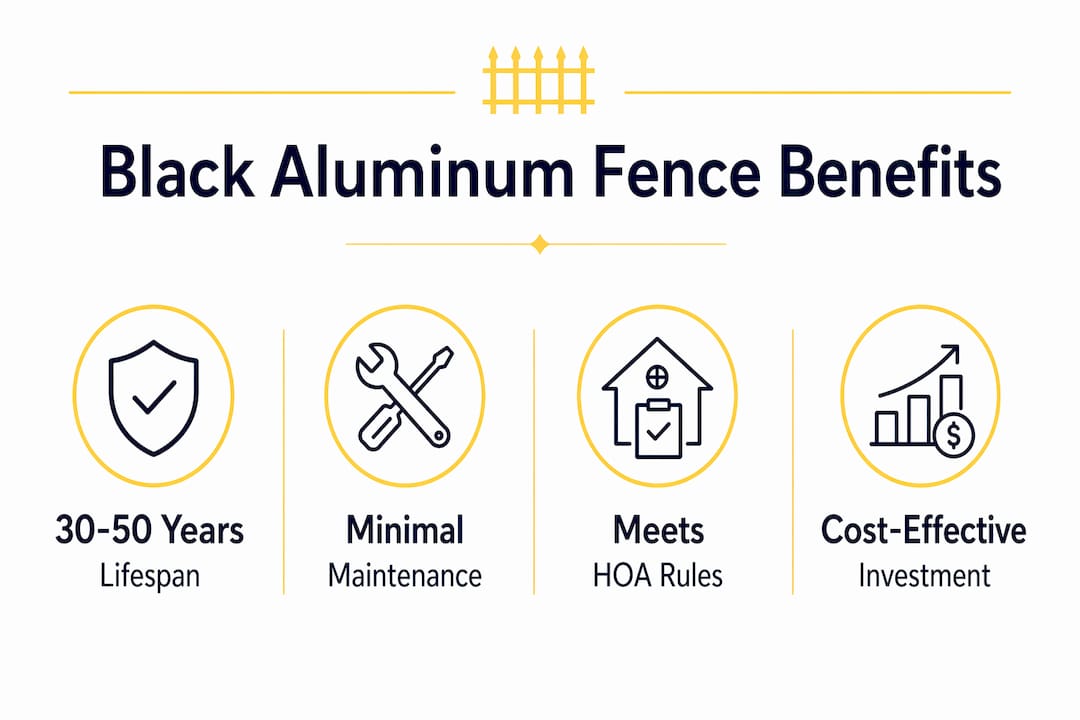
Ornamental aluminum fencing lasts 30 to 50 years with virtually no maintenance required. That lifespan is two to three times longer than a typical wood privacy fence, which needs staining or sealing every two to three years and often requires full replacement within 15 to 20 years. The math alone makes aluminum compelling for any homeowner thinking beyond the first five years of ownership.
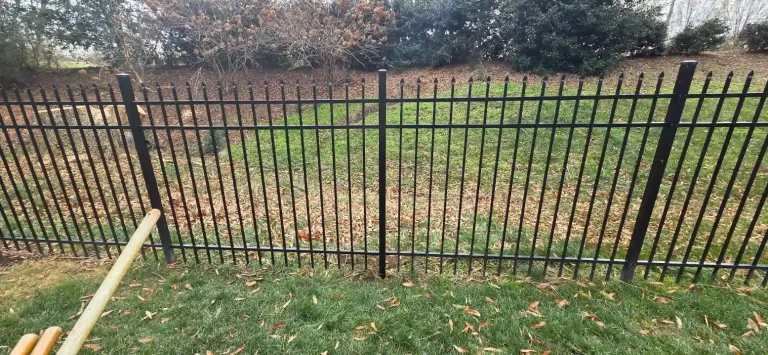
The durability comes from the powder-coating process. Aluminum panels are electrostatically coated with a dry powder, then cured under heat to form a hard, bonded shell. This shell protects against corrosion, UV fading, and surface scratches. One important caveat: aluminum can corrode if the powder coating is chipped and left unaddressed. High-quality coatings with a manufacturer warranty prevent this from becoming a real-world problem for most homeowners.
Here is how black aluminum compares to the two most common alternatives on maintenance demands:
Wood fencing: Requires staining or sealing every 2 to 3 years, is prone to rot and warping at post bases, and typically needs full replacement within 15 to 20 years.
Wrought iron fencing: Requires sanding and repainting every 3 to 5 years to prevent rust, and professional restoration can cost hundreds of dollars per section.
Black aluminum fencing: Requires only occasional rinsing with a garden hose. No painting, staining, or rust treatment needed.
Pro Tip: When reviewing quotes, ask specifically for powder-coating warranty documentation. A reputable product will carry a warranty on the finish itself, not just the structural components. This single detail separates budget panels from professional-grade installations.
How does black aluminum fencing meet Charlotte HOA guidelines and local regulations?
HOA compliance is where black aluminum fencing creates a genuine competitive advantage over other materials. HOA reviews in Ballantyne, Marvin, Weddington, and SouthPark consistently favor flat-top black powder-coated aluminum with specific requirements around style, height, and setback from property lines. When you choose this material and finish, your fence already matches what most architectural review committees expect to approve.
A typical HOA submission for a fence in these neighborhoods requires:
Exact fence specifications including panel height, picket spacing, and post dimensions
Color confirmation showing powder-coated black finish
A site plan showing fence placement relative to property lines and structures
Manufacturer product sheets for the specific panel style
Professional installers who prepare complete documentation packages reduce HOA review cycles significantly. Incomplete submissions are the most common reason approvals get delayed by weeks. Choosing black aluminum from the start, rather than a non-standard material or color, removes one of the biggest variables from that process.
Pool safety compliance adds another layer of regulation. North Carolina requires a minimum 48-inch barrier height measured from finished grade on the pool exterior side. On sloped properties, this requirement creates a real inspection risk: if a fence panel dips below 48 inches at any point along a grade change, the installation fails inspection. Rackable aluminum panels solve this by angling with the terrain while maintaining consistent height at every point.
Pro Tip: Always confirm your installer has direct experience with Mecklenburg County pool barrier inspections. The 48-inch measurement from finished grade is strictly enforced, and a single low point on a slope can trigger a failed inspection and costly corrections.
What aesthetic and security advantages do black aluminum fences offer homeowners?
Black aluminum fencing delivers the visual weight and elegance of traditional wrought iron without any of the upkeep burden. The wrought-iron look without rust or repainting is the single most cited reason Charlotte homeowners choose this material over alternatives. In neighborhoods where curb appeal directly affects property values, that distinction matters.
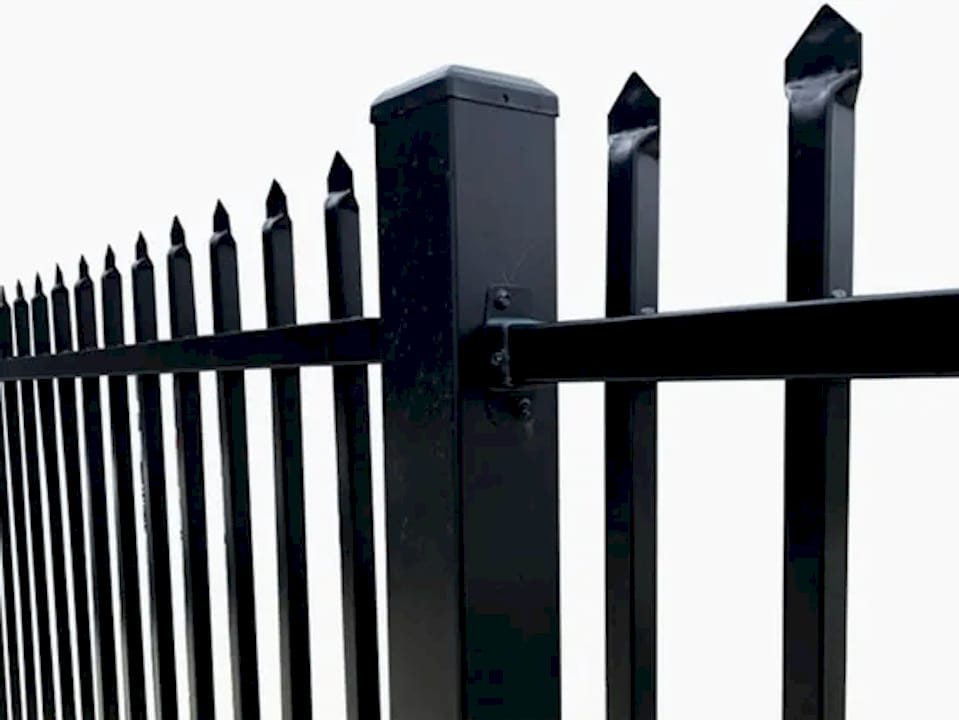
The color itself is a strategic choice. Black is a neutral that works with brick, stone, stucco, and painted siding. It frames a yard without competing with the home’s architecture. Lighter fence colors, like white vinyl or tan wood, can look dated within a decade as exterior paint trends shift. Black aluminum stays current because it reads as a permanent architectural element rather than a decorative accessory.
Security customization options include:
Spear-top pickets: Add a visual deterrent and physical barrier at the top of each panel, making the fence significantly harder to climb.
Heavy-duty panel grades: Commercial-grade aluminum panels use thicker pickets and rails, providing greater resistance to impact and forced entry.
Privacy panel inserts: Aluminum privacy slats or solid panel sections can be added to specific fence runs without changing the overall ornamental profile.
Self-closing, self-latching gates: Required for pool barriers by code, but also a practical security feature for any yard with children or pets.
The combination of ornamental style and functional security is difficult to replicate with wood or vinyl at the same price point. Fencing by purpose thinking, where you match the fence design to your specific security or privacy goal, consistently points back to aluminum as the most flexible platform.
How does black aluminum fencing compare financially to other materials?
The installed cost of ornamental aluminum fencing is often comparable to quality wood fence installation, which surprises most homeowners who assume aluminum costs more. The real financial difference appears over time. Wood requires ongoing maintenance spending. Aluminum does not. Over a 20-year ownership period, the total cost of a wood fence including materials, labor for repairs, and periodic replacement of rotted posts typically exceeds the total cost of an aluminum fence installed once and maintained with a garden hose.
| Material | Typical service life | Maintenance frequency | Relative lifetime cost |
|---|---|---|---|
| Black aluminum | 30 to 50 years | Minimal (rinse only) | Lowest over time |
| Wood | 15 to 20 years | Every 2 to 3 years | Moderate to high |
| Wrought iron | 20 to 30 years | Every 3 to 5 years | High (labor-intensive) |
| Vinyl | 20 to 30 years | Low | Moderate |
Aluminum costs roughly half of wrought iron for comparable visual results. For Charlotte homeowners who want the ornamental look without the iron price tag, that gap is decisive. Charlotte-area pricing varies based on panel grade, linear footage, terrain complexity, and gate count, so getting a site-specific quote is the only way to compare accurately.
Rackable panels also reduce future adjustment costs on sloped properties. A fence installed correctly on a grade change does not need to be re-leveled or rebuilt as the ground settles. That upfront installation precision pays for itself within the first few years.
Pro Tip: Ask your installer to break out the cost of panel grade options. Upgrading from residential to commercial-grade aluminum adds modest cost per linear foot but meaningfully extends the fence’s structural integrity, especially on properties with active children, large dogs, or security concerns.
What practical installation considerations should Charlotte homeowners know?
Charlotte’s terrain is more varied than most homeowners expect when planning a fence project. Rolling lots, retaining walls, and grade changes of two feet or more within a single fence run are common across neighborhoods like Myers Park, Dilworth, and Weddington. Rackable aluminum panels handle these transitions cleanly, angling with the slope while keeping picket heights consistent and code-compliant.
Key installation factors to address before breaking ground:
Utility locates: Call 811 before any post is set. North Carolina law requires it, and underground utilities are more common than most homeowners realize.
HOA pre-approval: Submit your fence specs and site plan before ordering materials. Approval timelines vary by HOA but typically run two to four weeks.
Gate placement: Plan gate locations relative to driveway grades and foot traffic patterns. A gate that swings uphill or into a slope creates daily frustration.
Post depth: Aluminum posts should be set in concrete at a depth appropriate for local soil conditions, typically one-third of the total post length.
DIY installation is possible for straightforward flat lots, but professional installation is the right call for sloped properties, pool barriers, or any project requiring HOA documentation. The cost difference between DIY and professional installation is often smaller than homeowners expect, and the risk of a failed pool inspection or HOA rejection is eliminated.
Pro Tip: Verify that your installer pulls the required permits for Mecklenburg County. Unpermitted fence installations can create complications when selling a home, and pool barriers without a passed inspection create liability exposure.
Key takeaways
Black aluminum fencing is the top choice for Charlotte homeowners because it combines the lowest lifetime maintenance cost, the strongest HOA approval rate, and the most flexible security and aesthetic customization of any residential fence material.
| Point | Details |
|---|---|
| Lifespan advantage | Black aluminum lasts 30 to 50 years with no repainting, staining, or rust treatment required. |
| HOA pre-alignment | Flat-top black powder-coated aluminum matches HOA requirements in Ballantyne, SouthPark, and Weddington before submission. |
| Pool code compliance | Rackable panels maintain the required 48-inch minimum height on slopes, preventing failed Mecklenburg County inspections. |
| Financial value | Aluminum costs roughly half of wrought iron and carries lower lifetime costs than wood due to zero maintenance spending. |
| Security flexibility | Spear tops, heavy-duty grades, and privacy inserts allow homeowners to customize security without changing the ornamental profile. |
What I’ve learned after years of Charlotte fence installations
After seeing hundreds of fence projects across Charlotte neighborhoods, the pattern that stands out most is how often homeowners underestimate the HOA approval process. They choose a material, order it, and then discover their HOA requires a specific picket style or color that their panels don’t match. Black flat-top aluminum eliminates that problem in most cases because it was essentially designed to meet the aesthetic standards that Charlotte’s newer upscale communities codified.
The maintenance conversation is where I see the biggest mindset shift. Homeowners who have owned a wood fence before understand immediately why aluminum is worth it. Homeowners buying their first home sometimes need to see the math laid out: no staining, no rot repairs, no post replacements, no repainting. Ever. That is a real financial and time savings over a 20-year ownership period.
One trend worth watching is the combination of ornamental aluminum with privacy fence sections. Homeowners are increasingly using aluminum for front yards and street-facing runs where curb appeal matters, then adding wood or vinyl privacy sections along rear property lines. This hybrid approach gives you the best of both materials without compromising on either goal. Fenceguycarolina has been doing this kind of custom layout work since 2003, and the demand for it has grown steadily as Charlotte neighborhoods have matured.
My honest advice: prioritize powder-coating quality and installer experience over upfront price. A fence installed correctly by someone who knows Mecklenburg County codes will cost you nothing extra for decades. A fence installed cheaply by someone unfamiliar with local requirements can cost you a failed inspection, an HOA rejection, and a reinstallation.
— SEO
How Fenceguycarolina helps Charlotte homeowners get it right
Fenceguycarolina has completed thousands of residential fence installations across the Greater Charlotte area since 2003, with deep expertise in HOA-compliant ornamental aluminum projects. Their team understands the specific requirements of Ballantyne, SouthPark, Marvin, and Weddington HOAs, and they prepare complete documentation packages to move approvals forward without delays.
From pool barrier compliance to sloped terrain installation, Fenceguycarolina brings local knowledge that generic contractors cannot match. Their aluminum fence installation service covers style selection, site planning, permit coordination, and post-installation inspection support. If you are weighing your Charlotte aluminum fence options and want a quote backed by real local experience, Fenceguycarolina offers free consultations with detailed site plans included.