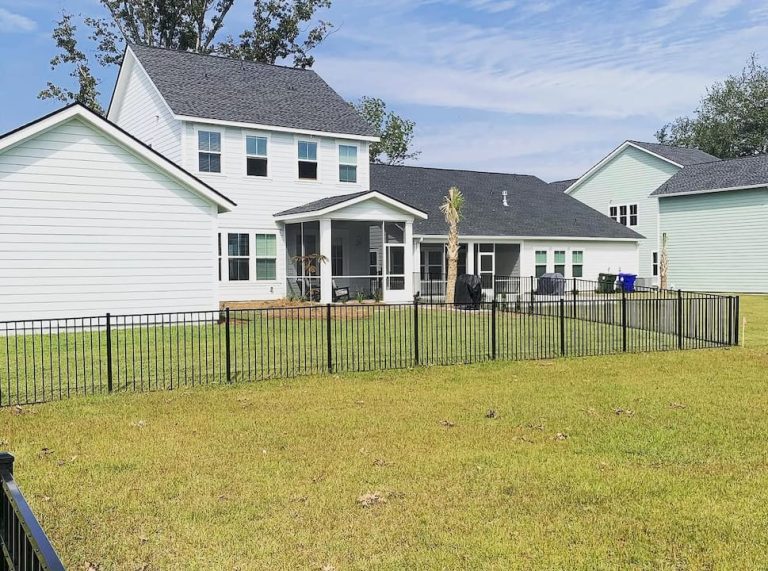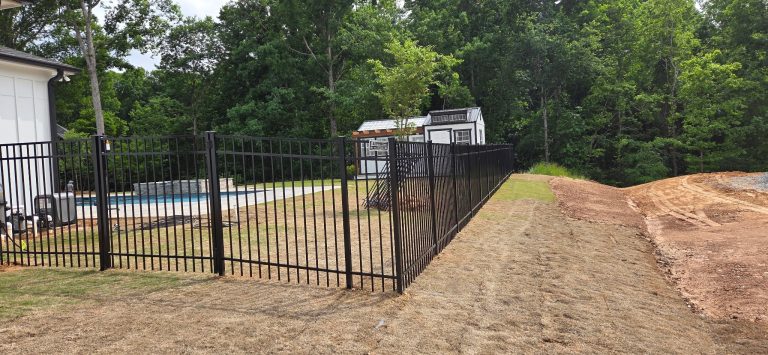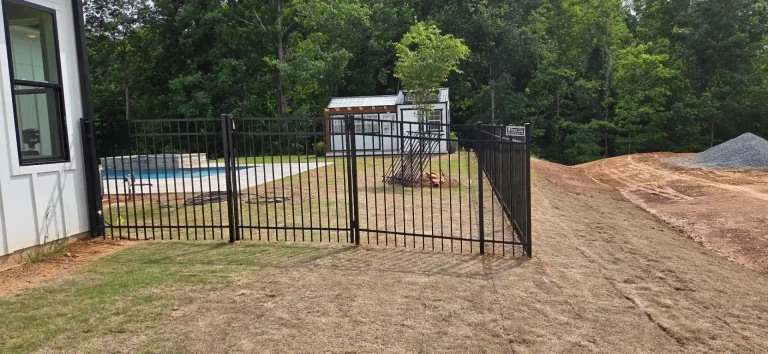

Pool fencing in Fort Mill and Tega Cay is defined as a code-compliant barrier system that protects backyard pools while enhancing the visual appeal of your outdoor space. The International Residential Code and International Swimming Pool and Spa Code set the baseline standards both communities follow, and local enforcement takes these rules seriously. Aluminum fencing stands out as the leading material for homeowners who want to satisfy those requirements without sacrificing curb appeal. Whether you are building a new pool or upgrading an existing barrier, understanding the intersection of Fort Mill pool safety rules and Tega Cay pool design preferences is the starting point for every smart fencing decision.
What are the mandatory pool fencing safety standards in Fort Mill and Tega Cay?
South Carolina municipalities, including Fort Mill and Tega Cay, follow the IRC and ISPSC for all pool barrier requirements. These codes are not suggestions. They are enforceable minimums that determine whether your pool passes inspection and whether you carry legal liability if an accident occurs.
The core requirements every homeowner must know:
Minimum fence height: 48 inches measured from the finished grade on the exterior side of the barrier.
Maximum opening size: 4 inches between any vertical pickets or horizontal rails, preventing a child from squeezing through or using gaps as footholds to climb.
Gate hardware: All pool gates must be self-closing and self-latching, with the latch positioned on the pool side of the gate at least 54 inches from the ground, or enclosed to prevent a child from reaching it.
Pool walls as barriers: A pool structure with walls 48 inches or higher can qualify as its own barrier, but only if access points are separately secured.
Non-latching gates are one of the most common causes of pool liability issues and can trigger mandatory pool closure. This is not a hardware detail you can defer. A gate that swings open freely because a spring is worn or a latch is corroded puts your family and your liability exposure at serious risk.
“Pool safety barriers are critical not just for code compliance but as fundamental liability protection for families.” — GenX Security Solutions
Violations in Fort Mill carry real financial consequences. Pools deeper than 24 inches or holding over 5,000 gallons require building and electrical permits, and non-compliance can result in fines ranging from $100 to $500 or removal orders. That range sounds manageable until you factor in the cost of tearing out a non-compliant fence and starting over.
Pro Tip: Inspect your gate hardware every spring before pool season opens. Lubricate hinges and latch mechanisms with a silicone-based spray, and test the self-closing function under load. A gate that passes inspection in April can fail by July if hardware is neglected.
How do aluminum, vinyl, and glass pool fences compare for safety and style?
Aluminum fencing is the preferred material in the Carolinas because it balances climb resistance, corrosion resistance, low maintenance, and aesthetic flexibility. Pool chemicals, humidity, and ground moisture degrade many materials over time. Aluminum does not rust, does not warp, and holds its finish for decades with minimal upkeep.
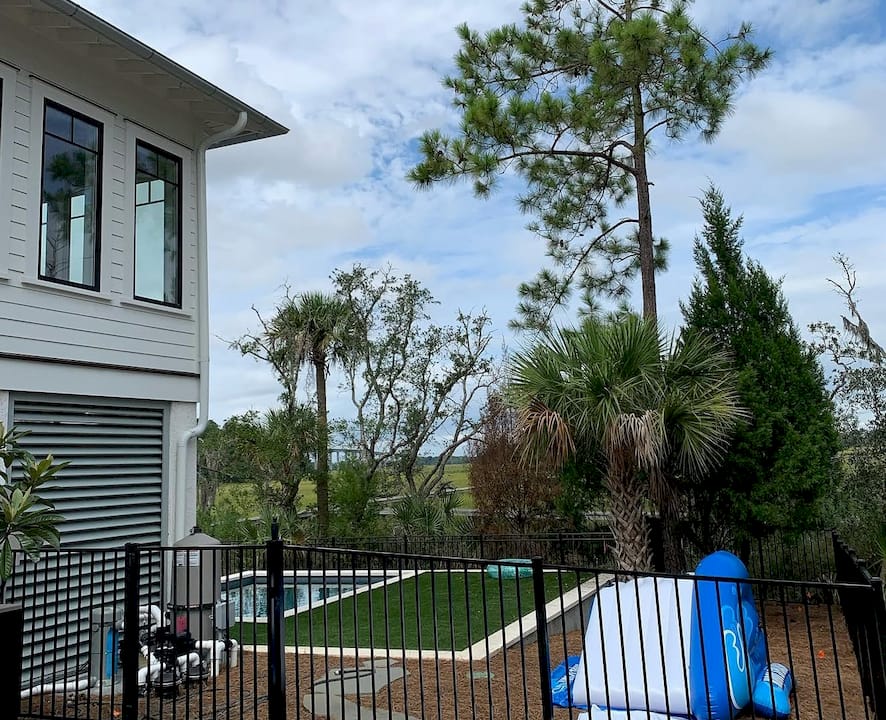
Here is how the three most popular materials stack up:
| Material | Cost per Linear Foot | Maintenance | Sightlines | HOA Acceptance |
|---|---|---|---|---|
| Aluminum | $35 to $80 | Very low | Open picket design | Widely accepted |
| Vinyl | $25 to $60 | Low to moderate | Solid or semi-private | Accepted with restrictions |
| Tempered glass | $150 to $300 | Moderate (cleaning) | Unobstructed | Premium communities |
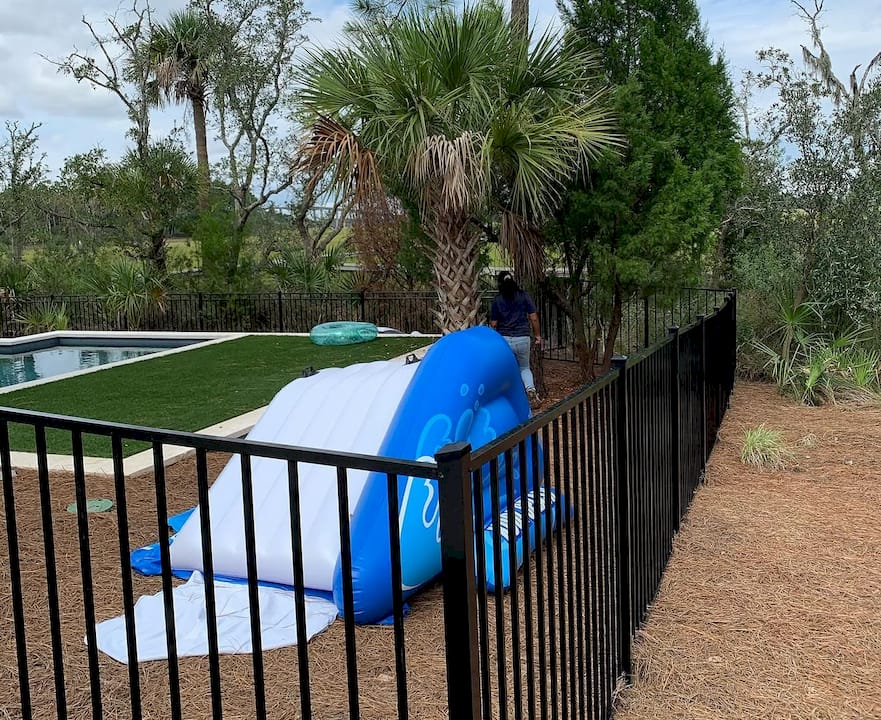
Aluminum costs $35 to $80 per linear foot, while tempered glass runs $150 to $300 per linear foot. That price gap is significant on a typical 150-foot pool perimeter. A homeowner choosing glass over aluminum can spend $17,000 to $33,000 more for the same linear footage, which is a premium most Fort Mill and Tega Cay buyers reserve for luxury builds.
Vinyl offers a lower entry price and works well in semi-private configurations, but it can become brittle over time when exposed to prolonged UV and pool chemical splash. Aluminum picket designs, by contrast, maintain structural integrity and meet the 4-inch gap requirement naturally through standard manufacturing. Most HOA covenants in Fort Mill and Tega Cay communities accept black powder-coated aluminum without restriction, while glass and certain vinyl styles may require board approval.
Pro Tip: If your HOA requires a specific fence color, order powder-coated aluminum in that color from the manufacturer rather than painting it on-site. Factory powder coating lasts significantly longer than field-applied paint and will not chip or peel around pool chemical exposure.
What is the process for getting pool fence permits in Fort Mill and Tega Cay?
The permitting process is where many homeowners lose weeks of time, and the most common reason is a jurisdictional mistake. Many homeowners assume their address falls under the Town of Fort Mill when they are actually in unincorporated York County. These are different jurisdictions with different permit portals, different code enforcement offices, and different inspection scheduling systems. Submitting to the wrong office delays your project and can invalidate your application entirely.
Follow this sequence to stay on track:
Verify your jurisdiction. Check your property tax records or contact York County Planning to confirm whether your address falls under the Town of Fort Mill, City of Tega Cay, or unincorporated York County.
Schedule the fence inspection as a standalone appointment. Fence inspections occur separately from structural pool inspections. The pool cannot be filled until the fence passes its own final inspection and the certificate of occupancy is issued.
What practical tips help you choose and maintain a stylish, code-compliant pool fence?
Choosing the right fence is a design decision as much as a safety one. The fence line is one of the most visible elements of your backyard, and the choices you make at the planning stage determine both how the space looks and how much effort it takes to keep it compliant over time.
Plan gate placement around how you actually use your yard. A gate positioned for convenience near the house entry point is also a gate that gets used constantly, which means the self-closing mechanism gets the most wear. Place gates where traffic is natural, then invest in commercial-grade hinges and latches at those locations.
Select finishes that coordinate with your home’s exterior. Black powder-coated aluminum is the most popular choice in Fort Mill and Tega Cay communities because it reads as neutral against brick, stone, and fiber cement siding. Bronze and dark green are strong alternatives for homes with warm-toned exteriors.
Consider ASTM F 1346-compliant powered safety covers as a supplemental barrier. Powered safety covers can sometimes substitute for traditional fences if approved by your local jurisdiction. They are not universally accepted, so verify with your building department before relying on one as your primary barrier.
Inspect the fence line after major storms. Wind and debris can shift posts, bend pickets, or compromise gate alignment. A fence that looks intact from a distance may have a latch that no longer engages properly.
Pro Tip: When landscaping around your pool fence, keep shrubs and planters at least 18 inches from the fence exterior. Dense plantings close to the fence create natural footholds that undermine the climb-resistance your fence was designed to provide.
Key takeaways
Aluminum pool fencing is the most practical choice for Fort Mill and Tega Cay homeowners because it satisfies IRC and ISPSC code requirements, resists pool chemical corrosion, and meets HOA standards at a fraction of the cost of glass alternatives.
| Point | Details |
|---|---|
| Code minimums are non-negotiable | Fences must be 48 inches tall with 4-inch max openings and self-latching gates. |
| Aluminum leads on value | At $35 to $80 per linear foot, aluminum outperforms glass on cost while meeting all safety codes. |
| Jurisdiction determines your permit path | Confirm whether you are in Fort Mill, Tega Cay, or unincorporated York County before submitting any permit. |
| HOA rules can override municipal codes | Get written HOA approval before purchasing materials to avoid removal orders. |
| Fence inspection is a standalone requirement | Pools cannot be filled until the fence passes its own inspection and occupancy is certified. |
Why I always tell homeowners to plan the fence before the pool
After seeing hundreds of pool projects across the Greater Charlotte area, the single most expensive mistake I encounter is treating the fence as the last item on the punch list. Homeowners finalize their pool design, select tile and coping, choose the pump system, and then ask about the fence two weeks before they want to swim. At that point, the permit timeline, HOA review, and inspection scheduling all become urgent problems that delay the project by weeks.
The fence is not an accessory. It is a structural component of the pool system in the eyes of your local building department. Fence inspections occur separately from structural inspections, and the pool cannot be filled until the fence passes. That sequence is fixed. No amount of contractor urgency changes it.
My honest recommendation: choose your fencing material and contractor at the same time you select your pool builder. Aluminum is the right call for most Fort Mill and Tega Cay homeowners. It handles pool chemical exposure without corroding, it satisfies the picket spacing requirements by design, and it looks sharp against the landscaping styles common in these communities. The aluminum fencing options available today come in profiles that read as genuinely elegant, not utilitarian.
The homeowners who end up happiest with their pool projects are the ones who treated the barrier as part of the design from day one, not a compliance checkbox added at the end.
Get a pool fence that works as hard as it looks
Fenceguycarolina has been installing code-compliant pool barriers across Fort Mill, Tega Cay, and the Greater Charlotte area since 2003. The team brings direct knowledge of York County permitting requirements, HOA covenant review, and the IRC and ISPSC standards that govern every installation.

Fenceguycarolina offers aluminum and vinyl pool fence installation with options designed to satisfy local codes and complement your home’s exterior. Every project starts with a free design consultation and estimate. If you want a fence that passes inspection, satisfies your HOA, and looks like it belongs there, explore the full range of fencing solutions by purpose or contact the team directly for a no-obligation quote.